
Ksa-voorzitter Michel Groothuizen heeft tijdens het 21st Annual Gaming Industry Event opnieuw zijn wens uitgesproken voor een Gambling Interpol. Hij vertelde in zijn toespraak over de plannen van de Kansspelautoriteit voor 2026. Zo komt de focus meer op het bestrijden van het illegale aanbod, onder andere door influencers harder aan te pakken als zij illegale casino's promoten.
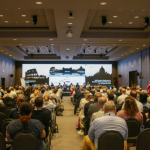
Vrijdag was het tijd voor het 21st Annual Gaming Industry Event, een evenement dat wordt georganiseerd door Franssen Tolboom Advocaten en International Masters of Gaming Law in De Industriële Groote Club op de Dam in Amsterdam. De voorzitter van de Kansspelautoriteit, Michel Groothuizen, was te gast tijdens het evenement en gaf een toespraak over de plannen van de toezichthouder voor het jaar 2026.
Groothuizen opende zijn speech door aan te geven dat hij waarde ziet in het contact dat er is tussen de Kansspelautoriteit en de sector. Hierbij is het volgens de voorzitter wel belangrijk dat de rollen duidelijk zijn en gerespecteerd worden.
Toezichtagenda
Volgende week zal de Kansspelautoriteit haar Toezichtagenda voor het jaar 2026 publiceren. In zijn speech ging Groothuizen alvast in op de vijf hoofdlijnen die terug te vinden zijn in die Toezichtagenda:
- Tackelen van illegale aanbieders;
- Beschermen kwetsbare groepen;
- Zorgplicht toezicht;
- Toezicht op reclame;
- Toezicht op compliance Wwft-eisen.
Er is volgens Groothuizen veel overlap binnen deze thema's, maar toch zal één punt voorop komen te staan: de speler. Dat is voor de Kansspelautoriteit dan ook het belangrijkste punt voor komend jaar: de speler op de eerste plaats.
Er zijn al veel maatregelen genomen om spelers te beschermen, maar die maatregelen hebben ook andere effecten, zo erkende de voorzitter. Hij stelt daarom dat het belangrijk is dat het illegale aanbod zoveel mogelijk gefrustreerd wordt. Daarom wil de Kansspelautoriteit de lijn voortzetten die is ingezet met de Alliantie tegen illegale kansspelen.
Onder andere door deze samenwerking met aanbieders, affiliates, spelproviders, en banken wilde Kansspelautoriteit zorgen dat de spelerskanalisatie zo hoog mogelijk blijft. Groothuizen zei trots te zijn dat deze kanalisatie nog steeds boven de 90% zit. Al wees hij er ook op dat dit gaat om een schatting. Hij zei er wel van overtuigd te zijn dat minimaal 75% van de Nederlandse gokkers uitsluitend bij legale aanbieders gokt. Dit percentage wil de toezichthouder in 2026 minstens zo hoog houden.
Gambling Interpol en strenger op influencers
Dit wil de Kansspelautoriteit onder andere doen door meer internationaal de samenwerking op te zoeken met toezichthouders van andere landen. Groothuizen herhaalde hierbij de wens voor een ‘Gambling Interpol', om zo meer gebruik te kunnen maken van de kennis die er is in andere landen over de illegale markt.
De Kansspelautoriteit zal haar capaciteit vergroten om het illegale aanbod aan te pakken. Een voorbeeld hiervan is dat illegale affiliates met een .nl-domeinnaam sneller ontoegankelijk kunnen worden gemaakt.
Ook zullen influencers harder worden aangepakt als zij reclame maken voor illegale goksites. Groothuizen zei hierbij dat de influencers die dit doen lang niet altijd zo naïef en onwetend zijn als ze zelf zeggen.
Kinderen
Aanvullend zal de focus meer komen te liggen op het beschermen van jongvolwassenen en minderjarigen. Ondanks dat deze laatste laatste groep niet mag gokken in Nederland, ziet de Kansspelautoriteit een toename in het verkeer naar goksites onder minderjarigen.
Dit gebeurt met name bij illegale goksites, omdat hier geen leeftijdsverificatie is. Maar ook bij legale aanbieders zou worden gegokt door minderjarigen. Dit gebeurt via accounts van bekenden of zelfs van ouders. Daarom wordt er ook ingezet op het beter informeren van ouders zodat zij hun kinderen zelf kunnen beschermen tegen de risico's van kansspelverslaving.
Om deze reden zal er ook meer aandacht zijn voor het platform TikTok, dat volgens Groothuizen vol staat met illegale gokreclames. En er komt meer guidance voor online reclame voor legale aanbieders zodat zij zo min mogelijk minderjarigen en jongvolwassenen bereiken. Al stelt Groothuizen ook dat dit in veel gevallen een kwestie van je gezonde verstand gebruiken is, ook al kan er soms met targetting voldaan worden aan de regels:
“Als ik mensen op straat zou vragen of het een goed idee is om gokadvertenties op Donald Duck.nl te plaatsen, kan ik me niet voorstellen dat iemand ja zou antwoorden. Houd dat in gedachten bij het nemen van marketingbeslissingen.”
Michel Groothuizen, voorzitter Kansspelautoriteit
Verder werd op het gebied van de zorgplicht onderzoeken in 2025 al een eerste stap gezet in de focus op jongvolwassenen. Vier aanbieders kregen reeds een boete vanwege het schenden van de zorgplicht. Wel ziet de Kansspelautoriteit veel verbetering sinds 1 oktober 2024, toen de nieuwe speellimieten en zorgplichtregels werden ingevoerd.
Nieuwe bestuursleden gevonden
Tot slot ging Groothuizen in op de vernieuwde organisatie die de Kansspelautoriteit sinds 1 januari 2026 is, zoals eerder werd aangekondigd. Hij sprak nog eens lovende woorden over de inmiddels gestopte Bernadette van Buchem, die tot 1 januari 2026 werkzaam was als vice-voorzitter bij de Kansspelautoriteit.
Groothuizen liet bovendien weten dat er inmiddels twee nieuwe bestuursleden zijn gevonden, maar dat deze nog goedgekeurd moeten worden alvorens zij worden aangekondigd. Hij kon daarom nog geen namen noemen, maar kon wel vertellen dat zij veel nieuwe kennis met zich mee zouden brengen en een schat aan ervaring.
Met deze nieuwe organisatie gaat de Kansspelautoriteit aan het werk om de Toezichtagenda zo goed mogelijk uit te voeren. Hij riep daarbij de aanbieders op om hun goede intenties waar te maken: de zorgplicht serieuzer nemen, de reclameregels niet verder oprekken, en de Wwft-regels correct naleven.
Hij sprak als laatste nog de hoop uit dat een aanzienlijk deel van de erkende exploitanten ook na 2026 actief blijft op de Nederlandse markt, zodat de toezichthouder met hen kan samenwerken aan het verder opbouwen van de een gokmarkt waarin de speler centraal staat.

Speech Michel Groothuizen, voorzitter Kansspelautoriteit
16 januari 2026, 21st Annual Gaming Industry Event, Amsterdam
Good morning everyone,
I’m glad to see you here. The last speech I gave was to a group of like-minded regulators, so I guess I need to alter my message somewhat. Although those meetings energise me because they’re highly instructive, I also recognise the value of engaging with the industry. The recent NRC article about operators lobbying while the Remote Gambling Act was taking shape naturally raises the question of how far we, as the regulator, should engage with gambling operators. Even so, I believe it’s important to keep talking to one another. As long as we respect our roles and understand what is – and what isn’t – in the public interest, sharing information remains highly valuable.
As part of that information-sharing, I’ll say more today about our new supervisory agenda for 2026 that we will publish next week. I’ll explain how we intend to deliver it within our new organisation, and how the process of renewing the remote gambling licences is progressing. I’ll also return to our broader focus on consumer protection. In other words, there’s plenty to discuss!
Each year, the Netherlands Gambling Authority sets a Supervisory Agenda. It defines our internal priorities and shows the outside world what we’ll focus on that year. In our annual plan for the Ministry, we’ve chosen the title ‘Putting the player first’. The Ksa is no longer just focused on gambling itself but even more so on those who engage in it. We also keep in mind those who don’t gamble or no longer do so, but I’ll return to that later when I talk about our consumer campaigns. We put the player first through five supervisory themes: tackling illegal gambling operators, protecting vulnerable groups, supervising the duty of care, supervising advertising, and supervising compliance with the Anti-Money Laundering and Anti-Terrorist Financing Act (Wwft). These themes overlap in several places. If the duty of care is properly complied with, vulnerable players are automatically better protected. And if we want to tighten the reins on advertising, for example, it’s crucial that we take more decisive action against advertising promoting illegal operators.
Let me start with the topic that is very much at the forefront of many of your minds, and on which I’ve spoken several times over the past year, both at events and in the media: tackling illegal operators. I understand it’s frustrating that half of the gross revenue associated with gambling in the Netherlands ends up in the pockets of illegal operators. Although you dispute the figure, I’m still proud that around 90% of Dutch gamblers currently use only licensed operators. That’s an estimate, of course, as we can never be certain how many people gamble through illegal operators. But I can confidently say that the percentage is higher than three-quarters of Dutch players, in any case. Our objective for 2026 is to keep it that way.
How will we do that? First, by increasing our capacity in this area. We’ll assign more people to disrupt the infrastructure of illegal operators and render it inaccessible. We’ll seek cooperation from stakeholders through the alliance we’ve set up specifically for this purpose. And we’ll also join forces with banks, internet service providers, marketing agencies and other parties who can enrich our supervision with new insights. We’ll build on the first successful steps we took in 2025. These include making .nl affiliates inaccessible through our cooperation with the Foundation for Internet Domain Registration in the Netherlands, and rapidly removing illegal content posted by influencers on social media. Those influencers are by no means always as naive and innocent as they claim to be, so we’ll come down hard on them as well. Finally, we’ll exchange information internationally on an ever-larger scale about our enforcement investigations. I’ve previously called for something like a ‘gambling Interpol’, and I can now see how that cooperation is increasingly taking shape. That’s a good start towards strengthening our effectiveness!
If you say, ‘Putting the player first’, you’re also talking about protecting vulnerable groups and those who don’t gamble, don’t yet gamble, or no longer gamble. We also include minors and young adults among those who ‘don’t yet gamble’. I see around me that children are increasingly coming into contact with gambling or elements of it at a young age. Casino-style games can be downloaded onto mobile devices without age verification. Games increasingly include loot boxes or similar features to keep players engaged or encourage them to spend more money. And TikTok, where children can create an account from the age of thirteen, is inundated with adverts for illegal gambling businesses.
We’re seeing an increase in the number of minors visiting gambling sites, both legal and illegal. With illegal operators, it’s often because there is no form of age verification at all. Minors also play through legal operators, often using the account of an older friend or even a parent. In our duty-of-care investigations, we place extra emphasis on protecting young adult players. We also look at how we can make parents more aware of the risks of gambling and give them practical tools to help in discussions with their children. Finally, we provide additional guidance on the current advertising rules to ensure that online advertising for legal operators reaches as few young adults and minors as possible.
I’ve briefly mentioned the duty-of-care investigations. Over the past year, we’ve published several duty-of-care fines. The case files examined for those fines predate the tightening of the duty-of-care rules, and we can see that many things are improving now. With the introduction of the mandatory affordability check and net deposit limits, we see that the proportion of high deposits is declining on average. Players are not spending such extreme amounts. While that is, of course, disadvantageous for your bottom line, I’m pleased, as the regulator, that these protective measures are working so well. And channelisation, in terms of number of players, doesn’t seem to have been hit too severely either.
Although things are improving, there’s still plenty to do. The duty of care will therefore remain a key priority for the Ksa in 2026. We’ll examine how the affordability checks I’ve mentioned are carried out. As the duty of care is not only about how much money someone loses, we’ll also be stricter about what operators monitor and how quickly they intervene. The number of problem gamblers must be reduced, and that is only possible with robust monitoring across a broad range of indicators. How that monitoring is carried out is also on our agenda: later this year, we’ll issue guidelines on the use of AI and automated monitoring tools.
Our third focus area is advertising. Earlier, I spoke about those who don’t gamble, don’t yet gamble, or no longer gamble. It’s important that we enforce the advertising rules strictly for all these groups. I keep repeating that the Ksa is not in favour of a total ban on advertising because I understand that operators need to be able to make themselves known; otherwise, the illegal market will take over. But that doesn’t mean I support unrestricted advertising. We already have a robust set of rules, but compliance can still be improved.
A good example is the ban on sports sponsorship. I want to applaud the fact that we’ve seen virtually no deliberate circumvention of that ban – unlike, for example, our Belgian neighbours. Even so, we regularly hear from consumers that it can still be hard to distinguish between online and offline gambling when dealing with hybrid operators.
We’ll provide further guidance on online advertising. In the meantime, I appeal to everyone’s common sense: if you don’t want young adults exposed to gambling ads, don’t advertise on platforms where they’re present in large numbers. Not even if the correct filters are set for the relevant advert. If I asked people on the street whether putting gambling ads on Donald Duck.nl is a good idea, I can’t imagine anyone answering yes. Keep that in mind when making marketing decisions. Don’t get stuck in the mindset of what is and isn’t permitted, just to push the boundaries in the grey area.
To conclude our supervisory agenda, I turn to a somewhat less appealing but no less important topic: the Anti-Money Laundering and Anti-Terrorist Financing Act. In this area, we had to issue too many warnings, instructions and fines last year. New international AML legislation is being implemented, and our supervision of its implementation will continue unabated. If you take compliance with the rules of this Act seriously, you’ll be delivering a significant element of player protection at the same time. After all, knowing what someone can and cannot afford and checking where money comes from is not only good for tackling crime.
We’re addressing all of these topics at the Ksa through a renewed, even more innovative organisation. Since the start of this year, I’ve felt somewhat at a loss without my trusted right hand, Bernadette, who is enjoying her well-deserved retirement. I had an excellent working relationship with her, and I do miss her presence. Even so, I’m pleased to share that we have found two exceptionally strong replacements for our Executive Board. Pending approval and screening by the General Intelligence and Security Service, I can’t yet share their names. But I can already say that having these two people on board will bring a great deal of useful new knowledge and many years of experience.
Beneath this three-person Executive Board, there will be three directors, each leading one of the three pillars of the Ksa’s new structure. Our former Head of Enforcement, later Head of Online Duty of Care, Ella Seijsener, will lead the Licensing and Supervision Directorate. The other two directors are external appointments: Roos Lawant for Player Protection and Board Advisory, and Daniël Palomo van Es for Digitalisation, Analysis and Business Operations. This new structure aligns with the Ksa’s revised strategy, placing greater emphasis on player protection, digitalisation and data-driven supervision.
I also want to say something about the increased focus on player protection. Over the past year, you have seen our first steps in public campaigns. We have raised awareness for the gambling stop (Gokstop) through Cruks – first in a very targeted way and on a small scale, with late-night ads on bus shelters near amusement arcades, and later more broadly through a social media campaign featuring hard-hitting videos. We’ve highlighted the possible risks of sports betting to young adults through the ‘zet betjes buitenspel’ (sideline your bets) campaign. I found it incredibly instructive to follow these campaigns and to think about how to reach target groups I haven’t been part of for years.
We will continue that work relentlessly this year. Although the platform has run smoothly since the end of last year, the real milestone is still to come: the launch of the new ‘Open over Gokken’ (Open about Gambling) website. Everyone will find information there – from players to non-gamblers, and from those with an addiction right through to support professionals. As the name suggests, it will cover everything related to gambling. We’ve worked with people with practical experience and academic professionals to make the information as accessible as possible, avoid patronising language, and help people find the right support services. In this way, we reduce gambling harm, raise awareness of the dangers and risks of gambling, and show those who still want to gamble where and how they can do so responsibly and safely.
So, this new year ushers in great change and renewal. In that context, one final topic remains: the renewal of the remote gambling licences that begin to expire this year. In the first five years since the market opened, we’ve learnt a great deal together about how a legal online gambling market works. The evaluation of the Remote Gambling Act covers what does and doesn’t work, and you’ve provided valuable input in that regard. We’ll continue to contribute ideas about the changes we want to see going forward – to keep channelisation where it needs to be, to remain an effective regulator, and to clamp down more firmly on illegal operators.
It’s then up to you to deliver on those good intentions: by stepping up your commitment to the duty of care, by not pushing the advertising rules to the limit, and by complying properly with the Anti-Money Laundering and Anti-Terrorist Financing Act. For my part, I’ll work hard to ensure that increased regulatory pressure does not lead to a major rise in illegal operators or create problems for the legal market. In 2026 and beyond, I also hope we can work with a substantial proportion of licensed operators to continue building a gambling market in which the player is at the heart.
Thank you for your attention.